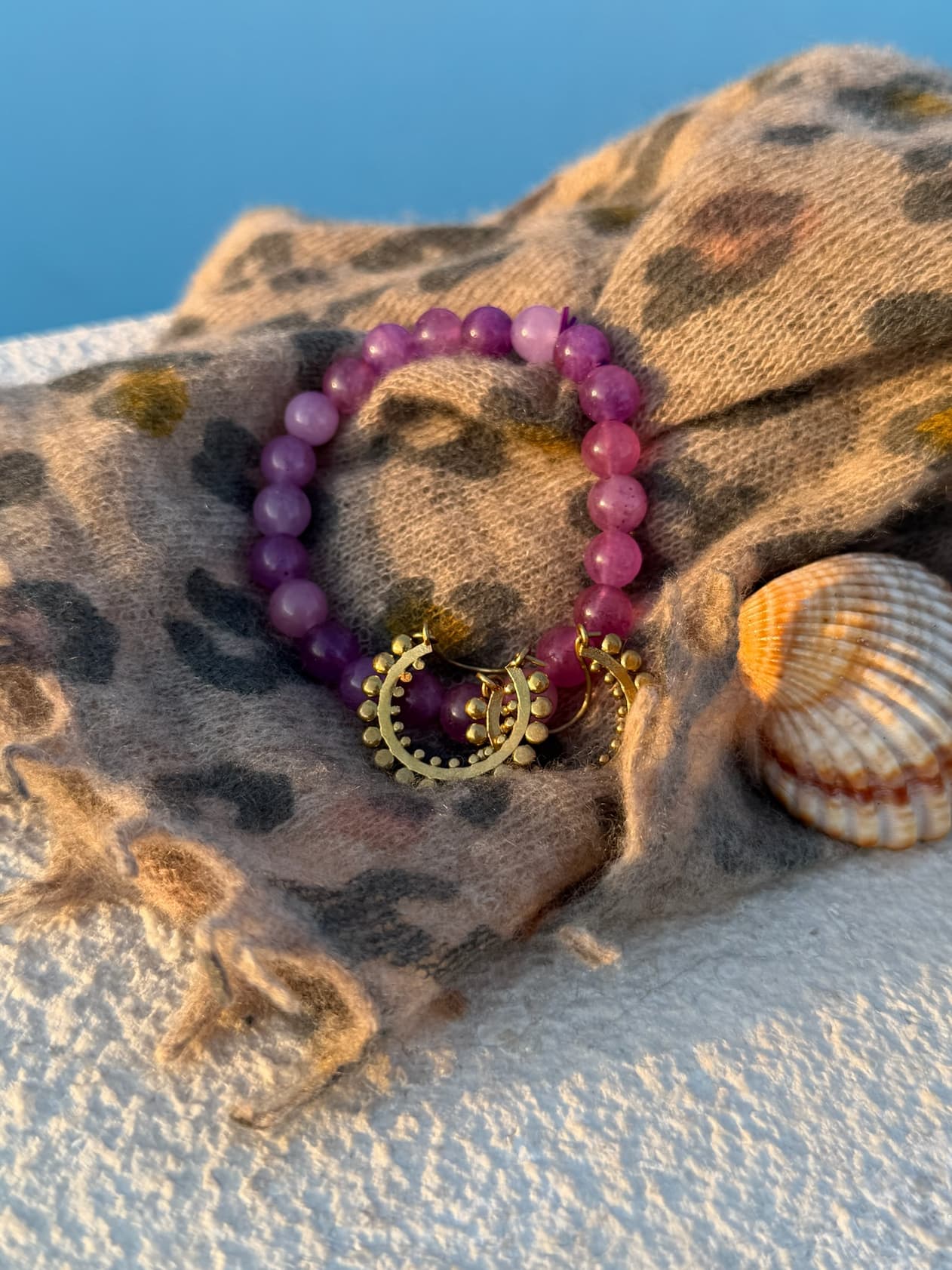

If you've ever touched real cashmere, you know: This is no ordinary fabric. Light as a feather, weightlessly soft, instantly cozy and warm. But where does this fiber actually come from - and why is it so precious? We'll take you with us.
The home of the cashmere goat 🐐🏔️

The secret begins with a special animal. The cashmere goat lives in the most extreme high mountain regions of the world - Mongolia, China and the Himalayas. Minus 40 °C in winter, scorching heat in summer.
In order to survive, nature has given them a two-layered coat:
- The outer, coarse coat protects against wind, snow and cold like a raincoat.
- The undercoat: The real treasure grows directly on the skin - an ultra-fine down that traps tiny air pockets and insulates perfectly.
Cashmere is made from precisely this undercoat.
Combing instead of shearing 🪮

How cashmere is obtained determines its quality and animal welfare. Genuine premium cashmere is not sheared by machine - it is combed out by hand.
In spring, the goat sheds its winter undercoat naturally. This is when the harvest begins:
- 🪮 Gentle combing out: Shepherds comb the goats gently with special combs - more wellness than stress for the animals.
- 💎 Fibers remain intact: Combing instead of shearing preserves the full fiber length. This makes the end product more durable and more resistant to pilling.
- 🧼 Sorting & cleaning: The raw wool is then separated from the awn hairs by hand, washed and sorted according to fineness.
Why is cashmere so rare?
A single cashmere goat only produces 150-200 grams of usable downy wool per year. A PAPA LOBSTER baby blanket requires the annual yield of three to four goats.
That explains everything. Cashmere is not a mass-produced commodity - it is a finite, carefully harvested resource. It is not a fast fashion product, but a piece that will last for generations if cared for properly.
What makes the fiber unique 🔬🤍

A human hair is approx. 50-70 microns thick. Normal sheep's wool is over 24 microns - enough to scratch the skin. PAPA LOBSTER cashmere measures less than 15-16 microns. The fibers are so fine that they cannot irritate nerve endings at all.
The result in practice:
- 🌡️ Thermoregulation: warms in winter, insulates against heat in summer. Adapts to the body temperature.
- 🍃 Breathable & dry: Absorbs moisture and releases it immediately - never feels wet.
- ✨ Self-cleaning: Cashmere naturally repels odors and dirt. Airing is often enough. And if something does happen: 30 °C wool wash cycle, done.
How do you recognize real cashmere? 🧐
The market is full of products that advertise "cashmere content" or "cashmere blend". Genuine premium cashmere can be recognized by a few clear characteristics:
- 🏷️ The label: genuine cashmere carries the label "100% cashmere" or "100% cashmere". Any admixture of other fibers noticeably reduces the quality and properties of the fiber.
- 🤲 The feel: Premium cashmere immediately feels light as a feather and weightlessly soft - not scratchy, not stiff. If a piece scratches your skin, it's not real cashmere.
- 🌀 The pilling test: High-quality, long-fiber cashmere hardly pills at all. Heavy pilling after a few washes is a sign of short fibers or inferior quality.
- 📍 The origin: Mongolian and Inner Mongolian cashmere is considered to be of particularly high quality. The extreme climatic conditions produce the finest fibers in the world.
At PAPA LOBSTER, we work exclusively with 100% finest cashmere from Inner Mongolia - processed in a family-run workshop in Nepal.
Cashmere & sustainability: what's behind it? 🌱
Cashmere has also made critical headlines in recent years - and rightly so. Too many goats in too small an area lead to overgrazing and desertification in some regions. This is a real problem that does not leave us indifferent.
That's why we at PAPA LOBSTER attach great importance to:
- Animal welfare standards: our partnership relies on traditional husbandry with sufficient grazing space - no mass farming.
- Fair production: Our pieces are made by hand in a small family business in Nepal, where craftsmanship and fair wages are paramount.
- Longevity instead of disposable fashion: The most sustainable garment is the one that will be worn for years. Cashmere, properly cared for, lasts for generations.
Frequently asked questions about cashmere production ❓
Where does the name "cashmere" come from?
The name is derived from the Kashmir region in the Himalayas, where the fiber first became known in the West. Today, most of the world's cashmere comes from Mongolia and Inner Mongolia in China.
How many cashmere goats are there worldwide?
It is estimated that there are around 800 million cashmere goats worldwide - sounds like a lot, but the amount of usable fiber per animal is so small that cashmere still remains a scarce resource.
Is cashmere better than merino wool?
Both are high-quality natural fibers. Cashmere is finer (15-16 microns vs. 17-22 microns for merino), lighter and softer - but also rarer and more expensive. Cashmere is the gentlest option for baby skin.
Can cashmere be suitable for allergy sufferers?
Yes, in many cases. Because the fibers are so fine, they hardly irritate the skin. Genuine 100% cashmere without chemical treatment is well tolerated by many allergy sufferers and people with sensitive skin.
How do I recognize fake cashmere?
Cheap "cashmere" products under 80-100 € for a sweater are almost always blended goods or inferior short fibers. Genuine premium cashmere has its price - and its durability, softness and function justify it more than any other material.
A gift from nature
Real luxury doesn't come from the factory - it grows in the mountains, cared for by people who have been doing it for generations. At PAPA LOBSTER, we use 100% pure, sustainably sourced cashmere out of conviction. Because our children deserve the softest the world has to offer.
Best wishes from your PAPA LOBSTER team! 💖