
One last peek into the kids’ room before dinner: The carpet has vanished under a thick layer of building blocks, art supplies, and stuffed animals. Right in the middle of it all lies the beloved cashmere baby blanket, which just a moment ago served as the roof for their “robber’s den.” The command “Please clean up your room!” falls on deaf ears, followed by loud protests or sudden, acute tiredness from the little one. Does this sound familiar?
Don’t worry, you’re definitely not alone. In the hustle and bustle of everyday family life, discussions about tidying up are an absolute classic. But at what age can kids actually start tidying up? And how can we motivate them to clean up without the evening ending in tears? As the PAPA LOBSTER team, we’ve taken a closer look at the whole thing with a lot of heart, a dash of humor, and a background in developmental psychology. 🤍
Developmental Psychology: At What Age Can Kids Start Cleaning Up? 👶🧠

Before we dive into our tips for tidying up the kids’ rooms, let’s take a look at the kids’ ages. Often, we expect things from our little ones that their brains aren’t yet evolutionarily capable of handling.
-
At 12 to 18 months (The Explorers): At this age, babies understand the concept of “putting things somewhere”—though without any real sense or purpose. They love throwing building blocks into a box (and then loudly emptying them out again the next moment). This isn’t mischief—it’s pure learning! The only way to truly teach a toddler to clean up at this stage is by doing it together.
-
From age 2 onward (The Sorters-in-Training): Two-year-olds can understand simple, clear instructions. “Pass me the car” works wonderfully. However, the abstract command “Clean up your room” completely overwhelms them. They just see a huge pile and don’t know where to start.
-
Ages 3 and up (The Category Kings): It’s not until around age three that children develop the cognitive ability to sort objects into categories—that is, to understand that the dolls belong in the basket and the books on the shelf. From now on, it’s time for real tidying-up games for toddlers!
Bye-bye visual clutter: Why a tidy room leads to a tidy mind 🌾🧘♀️
Have you ever heard of “visual noise”? Children’s rooms overflowing with neon-colored plastic toys and garish colors can overstimulate our children’s sensitive nervous systems in the blink of an eye. When a room is visually overwhelming, it’s incredibly hard to wind down after a long day—and tidying up afterward is even harder.
That’s why we at PAPA LOBSTER focus on the principles of calm and durability. A room designed with harmonious, cheerful color combinations, where high-quality natural materials set the tone, radiates a natural sense of security. When toys have a designated, visible spot in beautiful baskets, tidying up becomes a ritualized, soothing transition into the evening.
Cheeky & Playful SOS Tips: How do I get my child to clean up? 🎲🚀
Forget stern lectures. Children learn through play. When we make tidying up a playful activity, this tedious chore turns into a little adventure:
1. The Color Race 🔴🟡
Pick a color: “Who can find the most red things in 30 seconds and throw them in the box? On your marks, get set, go!” It’s fun, sparks a competitive spirit, and just like that—half the floor is already clear.
2. Putting Stuffed Animals to Bed 🐻💤
Stuffed animals don’t like sleeping on the hard floor. Tell a little story: “Look, the bear and the bunny are so tired from all their wild romping. Shall we put them in their soft basket beds together and tuck them in?”
3. The “Treasures Principle” (Valuing Things from an Early Age) 💎✨
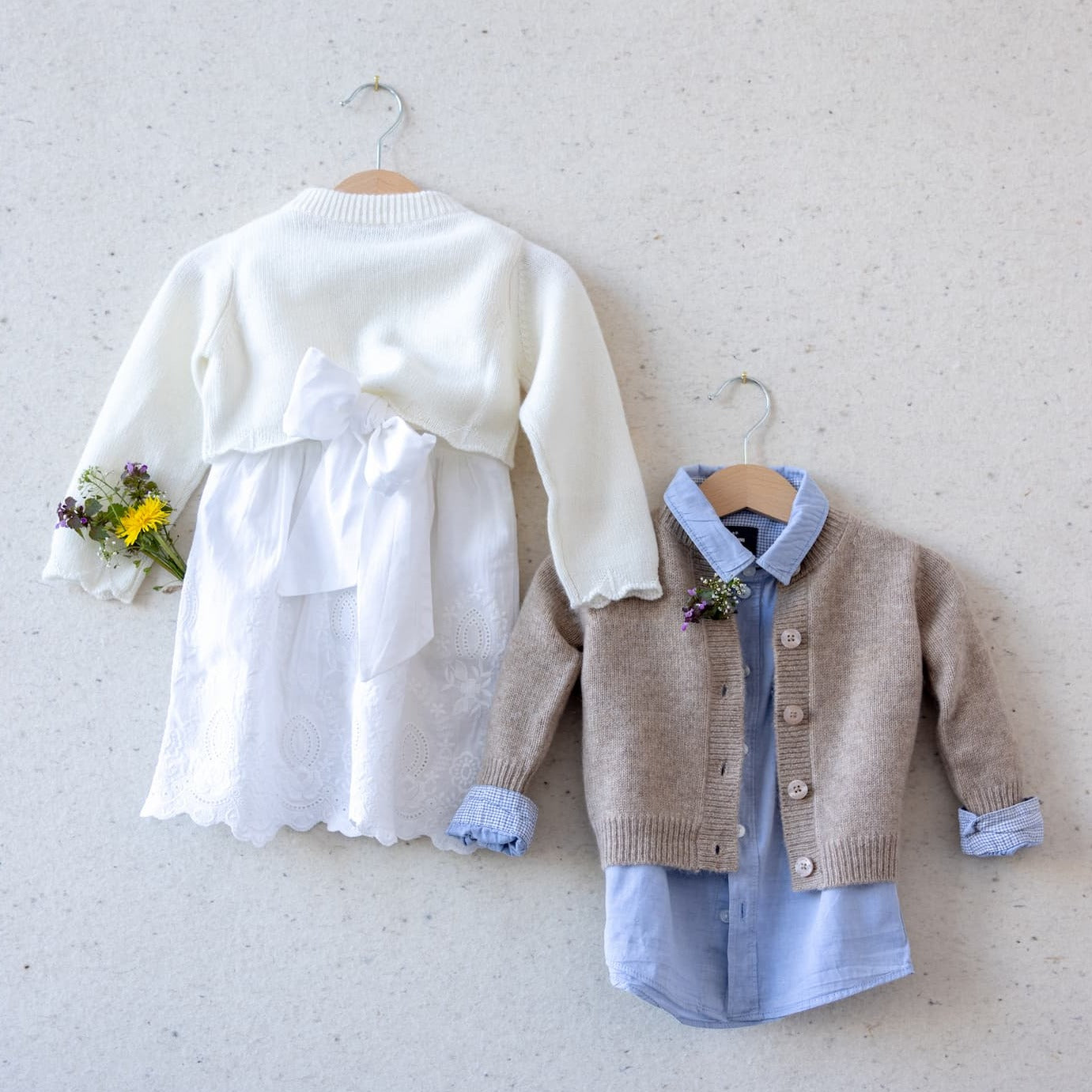
Children have a keen sense of which things hold special meaning. Teach them that real treasures should be treated like treasures. That delicate cashmere cardigan with the cute traditional details or that soft, cozy baby blanket shouldn’t be carelessly tossed into a corner. Together, we’ll shake them out, air them out briefly, and fold them neatly. When children learn to appreciate the quality and softness of their clothes, they automatically become more mindful of their surroundings.

Papa Lobster’s Golden Rule: Together, Not Alone 🤍
The most important tip to end with: Don’t leave your child alone to deal with the mess. Until elementary school age, tidying up is all about teamwork. Be the relaxed role model. When your little one sees you creating order with joy and ease, they’ll naturally copy that behavior.
And what if a pair of pants or a cardigan gets dirty during a wild tidying-up race? No problem! Our high-quality cashmere is durable, suitable for everyday use, and can be washed easily on the wool cycle.
Frequently Asked Questions (FAQ) About Tidying Up in the Kids’ Room 🧸💬
At what age do children start tidying up on their own?
Tidying up completely on their own—without parental help or reminders—usually doesn’t happen until elementary school age (around 6 to 7 years old). Before that, little ones simply don’t have an eye for the big picture. Until about age 5, tidying up is a team effort: You provide a playful structure, and your child actively helps out.
What should you do if your child absolutely refuses to clean up?
Take a deep breath, smile, and take the pressure off! Scolding only creates resistance. Instead, try offering a clear, simple choice: “Would you like to put the cars or the building blocks in the box today? I’ll take care of the rest.” Thisgives your child a sense of autonomy, relieves the feeling of being overwhelmed, and breaks through the resistance.
How many toys should be in the child’s room?
The rule here is: Less is often more. Too many toys create what’s called “visual noise” and overwhelm a child’s brain. A great trick is toy rotation: Pack half the toys into boxes in the attic or closet and swap them out every few weeks. This keeps things exciting and reduces the daily chaos by 50%!
What happens if clothes get dirty during a wild tidying-up game?
No need to panic! That’s exactly why we designed our PAPA LOBSTER collections. Our blankets, pants, and cardigans are made from 100% pure, high-quality cashmere. This natural fiber is inherently stain-resistant and surprisingly durable. After a wild afternoon in the kids’ room, simply shaking them out and airing them out in the fresh air is often all it takes. And for stubborn stains? Just pop them in the washing machine on the wool cycle at 30 °C—that’s how easy it is to enjoy true premium comfort in everyday family life!